Committees
Annual Conference
The Annual Conference Committee endeavors to plan and execute ITSPA’s Annual Conference. The committee will prepare a budget, visit and select a venue, and prepare the technical and social program. The location to be chosen will follow a three-year rotation, selecting a venue in the western, central, and eastern areas of the Commonwealth.

Elections


Equity Diversity & Inclusion



Events
The Events Committee endeavors to plan non-recurring technical and social events. These events, to be held throughout the Commonwealth, will encompass topical programs, networking, webinars, and joint events with neighboring state chapters and sister societies.
Government Relations
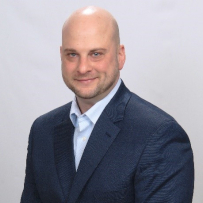
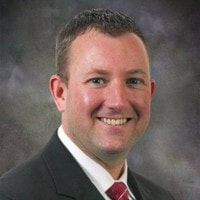
The Government Relations Committee endeavors to elicit the needs of our public member organizations. This committee works to disseminate public policy changes relevant to the Intelligent Transportation Systems industry, circulate key project information, and provide a peer-to-peer forum of continuing dialogue with our membership.
Legislative
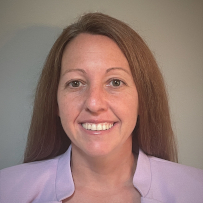
The Legislative Committee endeavors to prioritize the needs of ITSPA members by educating decision makers to promote the use and benefits of Intelligent Transportation Systems (ITS) on behalf of its members and to keep track of and educate members of key state and federal legislation that affects ITS. The Legislative Committee will prepare yearly action plans to speak to legislators.
Marketing & Communications
The Marketing & Communications Committee endeavors to assist the Secretary in disseminating information important to our membership through the use of the ITSPA website and social media.
Membership
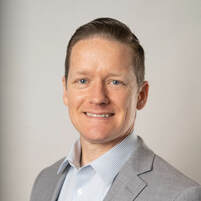
The Membership Committee endeavors to retain existing members, attract new and diverse members, and identify sectors where ITSPA can grow and serve. The Membership Committee will perform an annual membership drive and connect with members on how ITSPA can best serve their needs through online surveys.
Organizing Operating Committee
The Organizing Operating Committee endeavors to keep current the society’s by-laws, seek qualified individuals for nomination to the Board of Directors, and elicit submissions and select chapter awards for Person of the Year and Project of the Year.
Public Services
The Public Services Committee endeavors to investigate worthy nonprofit STEM and charitable organizations throughout the Commonwealth. ITSPA allocates a portion of its resources to the donation of funds and time.
University Outreach
The University Outreach Committee endeavors to connect with the academic and research communities. The University Outreach Committee will engage and recruit student members and volunteers, introducing them to Intelligent Transportation Systems (ITS) through student chapter events, our annual scholarship, and internships pairing students with member organizations. The University Outreach Committee will also promote ITS research and provide a forum for the interaction of research and practice.
ITS America Task Force Liaisons
State Chapters Council
Delegates from every chapter convene monthly by web conference and once a year in person as part of the State Chapters Council to share news and coordinate with ITS America’s national staff and Board of Directors. Through the Council, chapters are able to take advantage of national benefits like access to the U.S. Department of Transportation’s Professional Capacity Building Program, national workshops on best practices for non-profits, a membership rebate program, and additional professional and business development resources.
Automated Vehicles
The Automated Vehicle Standing Committee advocates for policies and regulatory frameworks to facilitate the safe testing, deployment, and integration of highly automated vehicles into the surface transportation system. Members work together to address highly automated vehicle policies and programmatic efforts covering highly automated vehicles, self-driving trucks, automated transit, workforce impacts and mitigation strategies, and land use and transportation system integration.
Liaison: Mark Kopko
Emerging Technologies
The Emerging Technologies Standing Committee identifies legislative and regulatory barriers and opportunities to safely advance emerging technologies, monitor national trends and related research, and promote best practices and private and public sector partnerships. It serves as a forum to disseminate and exchange information and other innovations, addressing areas such as rapid speed travel hyperloop, urban air mobility and cargo delivery, automated cargo delivery, and blockchain and integrated technology platforms.
Liaison: Gabby Benson
Mobility on Demand
The MOD Alliance identifies legislative and regulatory barriers and opportunities to advance Mobility on Demand, monitors national trends and related research, and promote best practices and private and public sector partnerships. It also serves as a forum to disseminate and exchange information and other innovations, addressing areas like transit and cargo delivery automation, payment integration, mobility wallets, accessibility, equity, data sharing, rural/suburban MOD, workforce, insurance, value/congestion pricing and privacy/cybersecurity.
Liaison: John Egger
Smart Infrastructure
The Smart Infrastructure Standing Committee advocates for automated, connected, shared, electrified transportation and broadband policies and programs that support the rapid deployment of intelligent transportation technologies leading to safer, greener, smarter, and more equitable communities. Recently, the committee led the policymaking process to develop the association’s FAST Act reauthorization platform – Moving People, Data, and Freight – and its COVID-19 response legislation. Committee members work on innovative policies to protect infrastructure and transportation systems from cyber threats; technologies to improve roadway efficiency, reduce accidents, and facilitate the safe introduction of autonomous technologies into the transportation system; and policies that support the electrification of our nation’s roadways, transit, and freight systems. As COVID-19 continues to impact the nation’s transportation system, the committee will continue its advocacy for emergency assistance for the transportation sectors ITS America represents.
Liaison: Jim Katsafanas
Sustainability and Resiliency
The Sustainability and Resiliency Standing Committee identifies legislative and regulatory barriers and opportunities to safely advance sustainable and resilient transportation technologies and frameworks; develops and advocates for related legislative and regulatory policies; defines and promotes the roles of public and private sector entities; monitors national trends and related research; promotes the development of technologies, best practices, and private and public sector partnerships; and serves as a forum to disseminate and exchange related information and best practices. It addresses topic areas such as electrified vehicles, charging infrastructure, power generation, power grid capability and resiliency, infrastructure resiliency, roadside management, advanced materials technologies, mobility efficiency, and transportation sector emissions.
Liaison: Justin Neff
V2X/Connected Transportation
The Vehicle-to-Everything (V2X) and Connected Transportation Standing Committee identifies legislative and regulatory barriers and opportunities to safely advance V2X technologies and connected transportation; develops and advocates for related legislative and regulatory policies; monitors national trends and related research; promotes the development of technologies, best practices, and private and public sector partnerships; and serves as a forum to disseminate and exchange related information and best practices. It addresses topic areas such as the development and deployment of connected, V2V, V2I, and V2P technologies and innovations; spectrum allocation and use; standards development; interoperability among technologies and infrastructure; cybersecurity; V2X application priority; and the future of V2X and connected technologies.
Liaison: Mike Pack
